
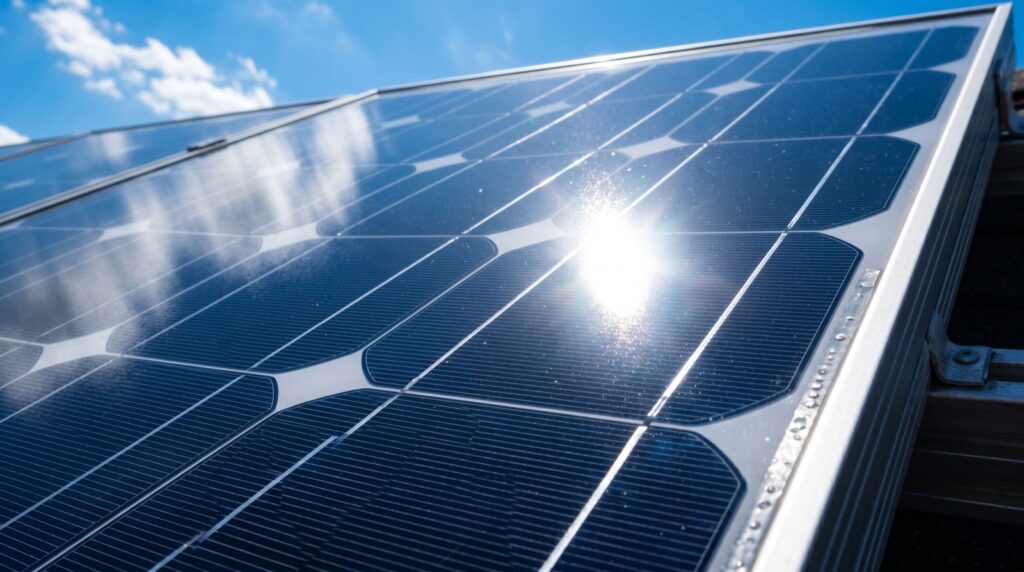
If you live anywhere in Khyber Pakhtunkhwa where the power vanishes for hours at a stretch, you have probably wondered whether a hybrid inverter in Pakistan is worth the extra money over a plain solar or UPS setup. My honest answer, after fitting these units in homes from Kohat to Peshawar, is that for load-shedding areas the hybrid is usually the smartest rupee you will spend in 2026. It keeps your net metering benefits when the grid is up and hands you seamless battery backup the moment it drops.
This guide explains what a hybrid inverter actually does, why it suits our outage-heavy grid, and how to pick one without overpaying for features you will never use.
What a hybrid inverter in Pakistan really does
A hybrid inverter is a single box that manages three energy sources at once: your solar panels, your battery bank, and the WAPDA grid. It decides, moment by moment, where your power comes from and where any surplus goes.
During the day it runs your home on solar and charges the battery. When your panels produce more than you use, a hybrid with net metering pushes the extra into the grid and spins your meter backwards. When the grid fails, it switches to battery so fast that your fans and lights barely flicker.
That last point is what separates a hybrid from an ordinary on-grid inverter. A standard grid-tie unit shuts down completely during load-shedding for safety. A hybrid keeps you running.
The three jobs it handles
- Converts panel DC into usable AC for your home appliances.
- Charges and protects a lithium or tubular battery bank.
- Synchronises with the grid for net metering and automatic backup switching.
Why hybrids suit load-shedding areas best
Load-shedding is not a rare emergency here; it is the daily rhythm. That changes what you should demand from an inverter. You are not buying backup for the odd outage. You are buying a system that expects the grid to disappear and carries on without drama.
A hybrid’s fast transfer time, often under twenty milliseconds on quality units, means sensitive electronics like your router, LED TV, and fridge never notice the switch. Cheaper changeover systems introduce a gap that reboots devices and, over time, wears out compressors.
There is also a financial angle. With net metering approved under the framework set by the National Electric Power Regulatory Authority (NEPRA), the surplus your panels generate on light-load days can offset the units you draw at night. A hybrid is what makes that two-way relationship with the grid possible.
Hybrid vs on-grid vs off-grid: which fits you?
People often use these terms loosely, so here is a plain comparison of how each behaves when the grid goes down and what it costs you.
| Feature | On-grid | Off-grid | Hybrid |
|---|---|---|---|
| Backup during load-shedding | No | Yes | Yes |
| Net metering / bill offset | Yes | No | Yes |
| Needs a battery | No | Yes | Optional but recommended |
| Best for | Stable-grid cities | Remote areas, no grid | Frequent outages |
| Upfront cost | Lowest | Medium | Higher, best value long-term |
For most KPK households sitting on an unreliable grid, the hybrid column is where you want to be. You get the bill savings of on-grid and the resilience of off-grid in one unit.
How do I choose the right hybrid inverter?
Start with capacity. Size the inverter to your peak evening load plus a 25 percent margin, exactly as you would any inverter. A 5 marla home usually lands on 3kW to 5kW, while a larger house with several ACs needs more.
Then check three things that separate a good hybrid from a frustrating one.
- Battery compatibility: confirm it supports lithium (with BMS communication) if you plan to use modern batteries.
- Transfer time: look for under 20ms so backup is seamless.
- MPPT solar input: a good MPPT tracker squeezes more from your panels on hazy or dusty days.
When you browse the range of quality units and hybrid inverter in Pakistan options at ABS Kohat, ask the shop to match the inverter to your specific battery chemistry and panel array rather than selling you a generic box.
A tip most buyers overlook
Check the inverter’s continuous versus peak rating, not just the headline number. A unit advertised as 5kW might only sustain 4kW continuously. That gap is exactly where an air conditioner and a water pump running together will trip you. I always read the fine print with my customers before we finalise.
Batteries: the other half of the system
A hybrid inverter without a well-matched battery is only half a backup solution. Your battery decides how long you stay powered once the grid drops.
- Lithium batteries last longer, charge faster, and need no maintenance, but cost more upfront.
- Tubular batteries are cheaper and proven, though they need water top-ups and give fewer cycles.
- Match battery voltage (12V, 24V, 48V) to your inverter’s input.
If you are assembling a full setup, it often makes sense to buy solar products online as a matched package, so the inverter, panels, and battery are guaranteed to work together instead of being pieced together from mismatched parts.
Frequently Asked Questions
Does a hybrid inverter work without a battery?
It can run your home on solar and grid during the day without a battery, but it cannot provide backup during load-shedding until you add one. For outage-heavy KPK, pairing it with a battery is what unlocks its main benefit.
Is a hybrid inverter worth the extra cost in Pakistan?
For areas with regular load-shedding, yes. You capture net metering savings and get automatic backup in a single unit, which usually beats buying an on-grid inverter and a separate UPS later.
Can a hybrid inverter reduce my WAPDA bill?
Yes. With approved net metering, surplus daytime solar is exported to the grid and credited against your night-time usage, which steadily shrinks your monthly bill.
How long do hybrid inverters last?
A quality hybrid inverter typically lasts eight to twelve years when sized correctly and kept cool and dust-free. Buying from trusted professionals who install and service locally extends that life considerably.
The bottom line
A hybrid inverter in Pakistan is built for exactly the conditions most of us face: an unreliable grid, rising bills, and long summer outages. It saves money through net metering and keeps your home running when WAPDA goes dark. Size it to your load, match it to a good battery, and buy from a shop that stands behind the install. Do that, and load-shedding stops being a nightly ordeal and becomes something you barely notice.