Patient Queue Management System: A 2026 Guide for Clinics
Waiting rooms should not feel like a test of patience. A modern patient queue management system turns crowded clinic lobbies into calm, organised spaces where people know exactly when their turn arrives. In 2026, hospitals and outpatient centres treat patient flow as a core part of care quality.
This guide explains how the technology streamlines healthcare visits, protects staff from crowd stress, and produces the data managers need to plan capacity. We draw on patterns proven across hospitals, diagnostic labs, and pharmacy counters.
Why Healthcare Needs Smart Patient Flow
Long, uncertain waits do more than annoy patients; they raise anxiety, crowd corridors, and pull staff away from care to manage the queue. Poor flow can even affect clinical outcomes when urgent cases sit unseen.
A patient queue management system fixes the flow itself. It registers arrivals, prioritises by need, and guides each person to the right department without a nurse playing traffic warden.
The benefit reaches beyond the lobby. Cleaner flow shortens the path from arrival to treatment, reduces missed appointments, and gives clinicians a steadier, more predictable schedule to work within.
The building blocks
- Self-service check-in — kiosks or mobile registration on arrival.
- Priority routing — urgent or elderly patients move up fairly.
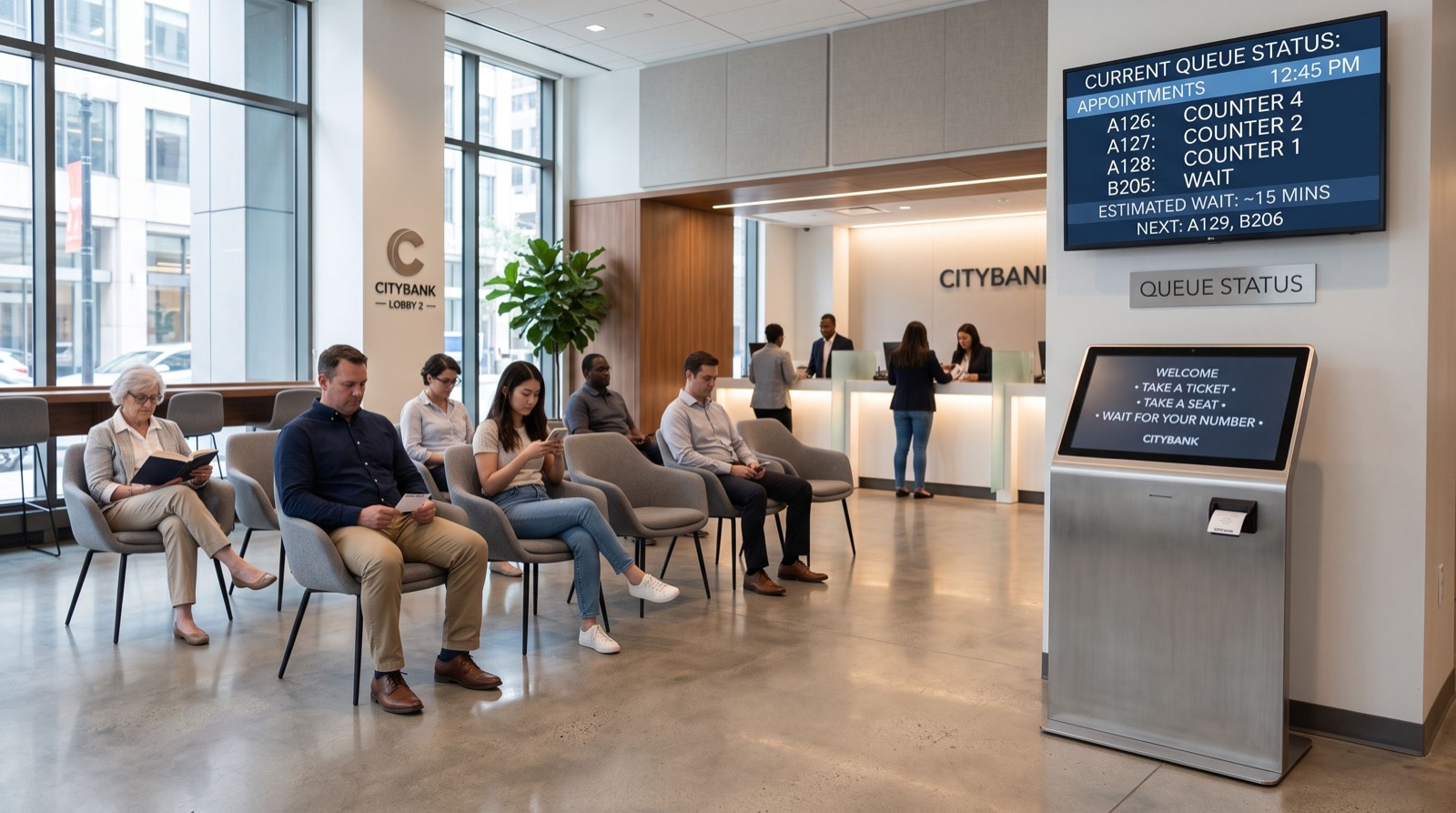
- Department displays — screens call patients to consultation rooms.
- SMS and app updates — patients wait comfortably, not in a scrum.
- Flow analytics — managers see bottlenecks in real time.
Together these tools replace the paper sign-in sheet with a transparent, fair, measurable process.
How Does a Queue System Improve Patient Experience?
It restores a sense of control. When a patient sees their position and estimated wait, uncertainty fades and stress drops, even before the actual wait shortens.
Comfort follows control. With mobile check-in, patients can wait in their car or a quiet corner and return when the app calls them, which eases lobby crowding and infection risk alike.
Fair prioritisation without friction
Healthcare queues are rarely first-come-first-served. A good system blends appointment times, walk-ins, and clinical urgency so the sickest patients are seen promptly without sparking disputes at the desk.
For networks expanding regionally, a unified queue management system in saudi arabia connects every clinic to one dashboard, letting administrators balance load across sites and shift resources where demand spikes.
Communication matters as much as speed. Clear on-screen calls and gentle audio announcements reassure patients that the system has not forgotten them, which reduces anxious trips back to the reception desk.
Accessibility rounds out the experience. Large-font displays, audio prompts, and multilingual interfaces ensure elderly patients and non-native speakers navigate the queue with the same confidence as everyone else.
Comparing Deployment Models in 2026
Clinics can host the system on-site or in the cloud. Each model suits different security needs, budgets, and IT capabilities, so weigh them before committing.
| Factor | On-Premise | Cloud-Based |
|---|---|---|
| Upfront cost | Higher | Lower |
| Multi-site dashboard | Complex | Built-in |
| Maintenance burden | In-house | Vendor-managed |
| Remote updates | Manual | Automatic |
| Best for | Single large hospital | Clinic networks |
Large single hospitals with strong IT teams often prefer on-premise control. Growing clinic groups usually favour cloud for its central dashboard and hands-off maintenance.
Hybrid models are gaining ground in 2026. Some hospitals keep sensitive registration data on-site while pushing anonymised flow analytics to the cloud, capturing the security of one model and the reporting reach of the other.
Steps to a smooth rollout
- Map your current patient journey and pain points.
- Pilot in one busy department, such as outpatients.
- Train reception and clinical staff on the new flow.
- Enable mobile check-in once the desk process is stable.
- Review analytics weekly and refine priority rules.
Measuring Impact on Care and Efficiency
Track the metrics that matter to both patients and administrators. Baseline them before launch so you can prove the improvement later.
- Average wait time — the metric patients feel most.
- Door-to-doctor time — a key clinical efficiency marker.
- No-show and walk-out rates — how many leave before care.
- Staff time on queue admin — hours returned to actual care.
One practical tip from the field: create a dedicated fast-track lane for simple, high-volume tasks like repeat prescriptions or sample drop-offs. Pulling those quick visits out of the main queue frees consultation slots for patients who truly need them.
Use the analytics to plan staffing, not just to report it. When the data shows a reliable Monday-morning surge, you can roster an extra clinician for that window and smooth the week’s worst bottleneck before it forms.
The U.S. Centers for Disease Control and Prevention highlights that reducing crowding in waiting areas supports infection control — a direct, measurable benefit of well-managed patient flow.
Choosing the Right Implementation Partner
Healthcare is unforgiving of downtime, so pick a vendor with clinical experience and dependable local support. The system must run reliably from the first patient of the day to the last.
Working with trusted professionals ensures fast installation, thorough training, and quick help whenever a screen or kiosk needs attention.
Many providers deploy the same platform beyond healthcare too. A single queue management system can serve hospitals, banks, and government offices, which simplifies procurement and support for large organisations running mixed facilities.
Frequently Asked Questions
Can a queue system handle both appointments and walk-ins?
Yes. Modern platforms merge scheduled appointments, walk-ins, and clinical priority into one intelligent queue, so patients are seen fairly based on time and urgency together.
Is patient data kept secure?
Reputable systems encrypt data in transit and at rest and support role-based access. Always confirm the vendor meets your local healthcare data-protection requirements before deployment.
How quickly can a clinic go live?
A single department can launch within days, including kiosk setup and staff training. Multi-site networks follow a phased rollout, usually beginning with one pilot clinic.
Do patients need to download an app?
No. Most systems offer SMS updates and web-based check-in alongside optional apps, so patients without a smartphone are never excluded from the smoother experience.
Conclusion
A patient queue management system delivers calmer waiting rooms, faster door-to-doctor times, and staff freed to focus on care. In 2026 it is a practical, proven upgrade for any clinic serious about patient experience.
Remember that technology only amplifies good process. Map the patient journey honestly, remove the steps that add no value, and let the system enforce the smoother flow you designed.
Start with a pilot, measure the gains, and choose a partner who stays with you after launch. Ready to transform your waiting room? Speak to a specialist today and put your patients first.